A damaged drain repaired from the inside. In an occupied city building that is frequently not the cheaper option, it is the only practical one.
Online Now!·--:--
In a house, relining and excavation are two ways of solving the same problem and you choose between them on cost and disruption.
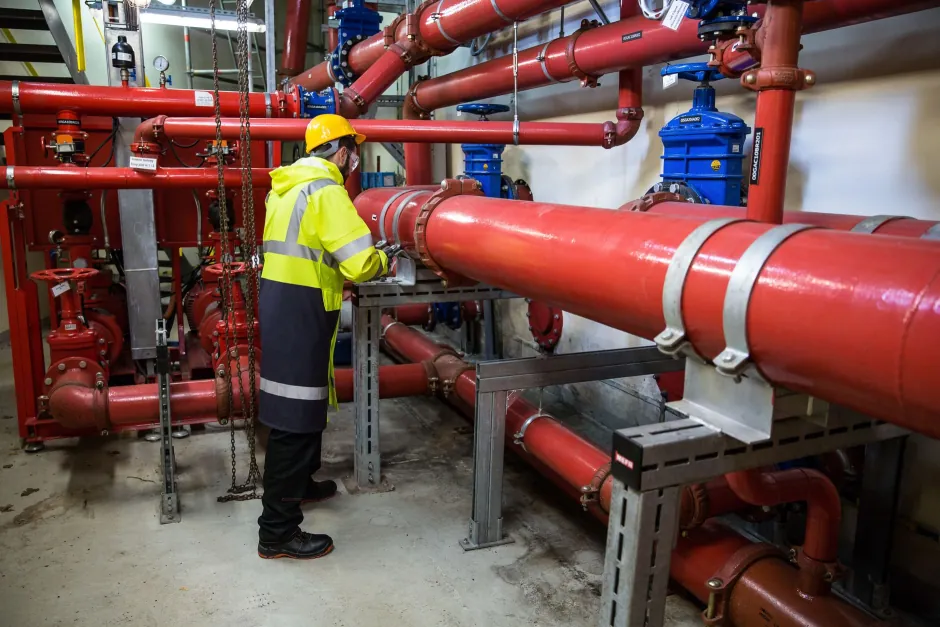
In an occupied city building that choice mostly does not exist. Drainage runs beneath slabs, through car parks and under common areas, and opening it up is not a question of price. It is a question of whether it can be done at all while people are living and working above it.
So relining here is not the economical alternative. It is frequently the only practical repair, and the useful conversation is about what it involves rather than whether to do it.
That said, the camera still decides. A run that has collapsed or separated needs opening up, and if that is what you have we will say so plainly rather than lining something that will not hold.


Even where relining is the only realistic option, the footage decides whether the line can actually take a liner.
Drainage runs beneath slabs, car parks and common areas in an occupied building.
Opening that up is not a cost question so much as a feasibility one.
It is rarely whether to reline. It is what relining involves and what the building needs to approve.
Framing it that way saves everybody a round of pointless comparison.
Anything touching it generally requires the building's agreement, and early is far easier than late.
We write the findings and the proposed work in a form a committee can act on.
It restores the pipe. It cannot change the gradient the pipe was laid at.
Where fall has been lost that is a different repair, and a much larger one here.
A collapsed or separated run has no host pipe to line against.
The camera identifies that, and we say so rather than lining something that will fail.
Quoted against footage rather than a description. These are indicative 2026 ranges, and where excavation is genuinely available we price it alongside.
Footage handed over, written for a committee or a building manager.
A defined defect repaired from inside, through existing access where possible.
Depending on length and access, with common areas generally staying usable.
So the liner cures against sound pipe rather than over build-up.
Priced alongside where digging is genuinely an option, and we say when it is not.

With building access arranged. The footage decides whether the line can take a liner at all.

Findings and proposed work in a form a committee or a building manager can act on.

Cleaned properly so the liner cures against sound pipe rather than over build-up.

The finished liner recorded end to end, footage handed over with the warranty.
Clearing it again is a schedule, not a fix. Footage will show whether a liner ends it.
Call 1300 381 569
Because the alternative frequently does not exist. In a house you can choose between digging and lining. Under an occupied city building, opening up drainage that runs beneath slabs, car parks and common areas is not a matter of cost, it is a matter of whether it can be done at all while people are living and working there. A liner repairs the pipe from inside, which is why it is so often the answer.
For anything touching common property, generally yes, and it is far better raised early. We can put the findings and the proposed work in writing in a form a committee or a building manager can actually act on, which is usually what the approval process needs.
No. A liner restores the pipe, it cannot change the gradient it was laid at. Where the footage shows a section holding water because the fall has gone, that is a different repair and we will say which you have before quoting either.
Considerably less than the alternative. Usually one access point, frequently an existing one, with the work happening inside the pipe. Common areas generally stay usable, which in an occupied building is most of what anybody is weighing up.
Most can. A run that has collapsed, or separated so far there is no host pipe left to line against, needs opening up, and in a city building that is a significant piece of work. The camera decides, which is why we film before quoting.
A structural repair rather than a patch, designed in decades. We will not attach a figure to a drain we have not filmed, because it depends on what is left of the host pipe.
A camera inspection and report is $250 to $450. A junction or short section repair is $1,500 to $3,500. A longer run is $4,000 to $9,000 depending on length and access. Where excavation is genuinely an option we will price that alongside so you can compare.
Tell us whether this is common property, who approves the work, and whether it has ever been filmed. Those three shape the whole job.
Camera first, findings written for an approval process, and a straight answer when a line is not a candidate.
Online Now!·--:--